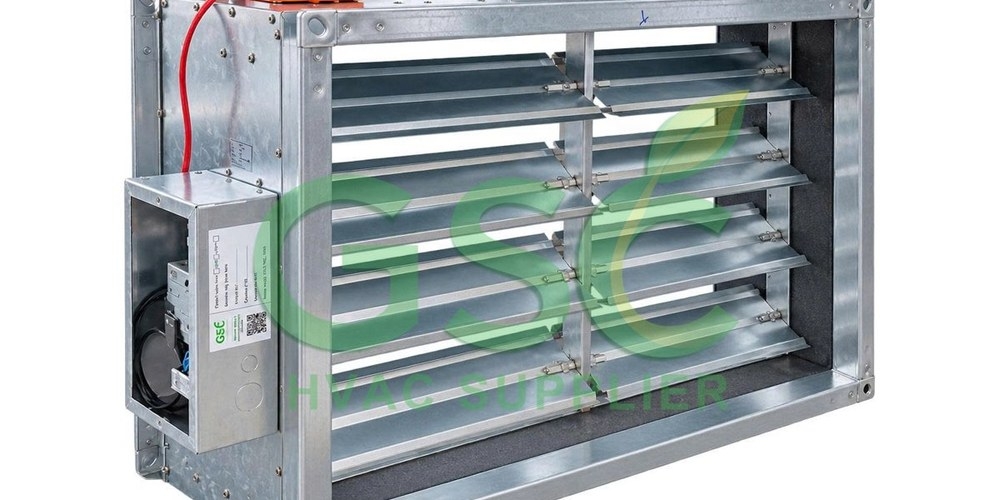
In hospitals, commercial kitchens, restaurants and smoking rooms, the direction of airflow matters as much as temperature: a room may need positive pressure so smoke and dust do not flow in, or negative pressure so odours and contaminants do not spread to surrounding areas. A standard VAV box controls temperature and airflow and cannot hold this pressure difference. GSC’s VAV Universal – room pressure (GSC-VAV-P) uses the Belimo VRU-M1R-BAC controller with an integrated differential-pressure sensor (−75 to +75 Pa) and the LM24A-VST actuator. The box is mounted on the supply or extract damper and drives it to hold room pressure relative to the adjacent area, suited to rooms with non-critical leakage (leakage above 5–10% of supply flow).
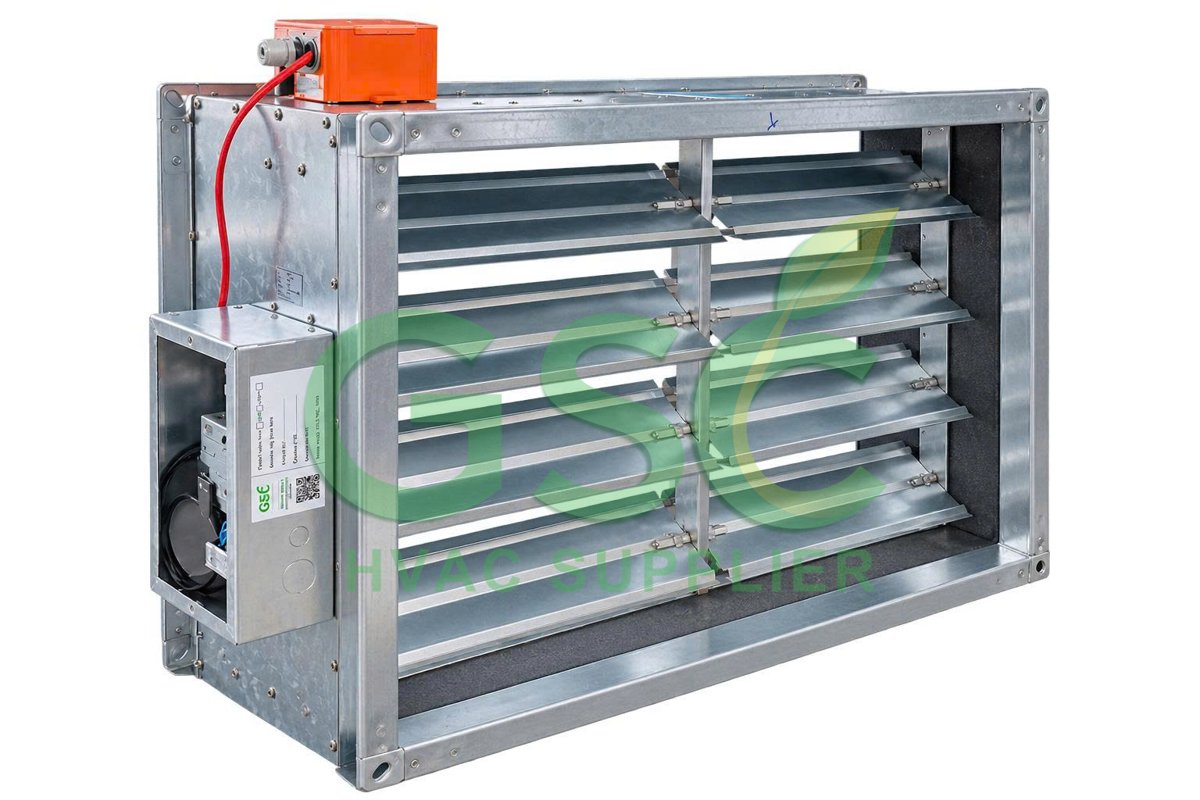
GSC-VAV-P room-pressure line: multi-blade damper and side-mounted control box.
| Room type | Pressure target | Purpose |
|---|---|---|
| Operating theatres, cleanrooms, sterile compounding areas | Positive relative to adjacent areas | Prevent dirty air entering the clean room |
| Airborne-infection isolation rooms | Negative relative to the corridor | Keep pathogens inside the room |
| Anterooms, corridors between two cleanliness grades | Intermediate level in a pressure cascade | Create airflow from clean to less-clean areas |
The exact pressure difference is set by the project design and applicable standards. Common references include ASHRAE 170 for healthcare facilities (positive pressure for operating rooms, negative for isolation rooms) and guidance for pharmaceutical cleanrooms by grade. This is reference information only and must be checked against the exact standard edition adopted by the owner and design consultant. The table above is general background on pressure targets; the GSC-VAV-P only suits rooms with non-critical leakage (see the next section).
According to Belimo documentation, the VRU-M1R-BAC controller offers different room-pressure applications depending on the room leakage (overflow). This is the deciding point before selecting equipment:
| Application (Belimo) | Room type | Control method |
|---|---|---|
| RP – A: non-critical leakage (GSC-VAV-P configuration) | Rooms with leakage > 5–10% of supply flow, tightness class 0 and 1 per VDI 2083-19; for example smoking rooms, restaurants, kitchen extract | Controller acts on the supply or extract damper; the opposite VAV unit handles the air exchange by temperature or air quality |
| RP – B: low leakage | Tight rooms with low leakage | Controller acts on a bypass damper installed parallel to the VAV unit. Not part of the standard GSC-VAV-P configuration |
| RPC – cascade control | Tight rooms with low leakage | Room pressure drives a volumetric-flow controller in cascade. Not part of the standard GSC-VAV-P configuration |
|
Important note • The GSC-VAV-P is currently configured on the supply/extract damper (group A), so it suits rooms with non-critical leakage. • Operating theatres, isolation rooms and cleanrooms are usually tight, low-leakage rooms that need a bypass or cascade configuration and coordinated supply and exhaust design. These cases are outside the standard configuration and must be assessed per project. • The configuration for each room must be confirmed by GSC and the design consultant based on the actual tightness of the room. |
| Device | Key specifications (per Belimo datasheet) |
|---|---|
| VRU-M1R-BAC controller | Integrated M1R static-diaphragm differential-pressure sensor, −75…+75 Pa, no zeroing needed, any mounting orientation; 24 V AC/DC supply; BACnet MS/TP, Modbus RTU or MP-Bus; analogue 0/2…10 V signal; configuration via Belimo Assistant app, NFC |
| Pressure settings | P′nom 5…75 Pa; P′max adjustable 20…100% of P′nom; P′min adjustable 0…100% of P′nom; positive/negative pressure switchable via the Belimo Assistant app or BACnet/Modbus command |
| Protection functions | Door monitoring: with the door open the actuator holds its position (motor stop); local override modes: motor stop, damper open, Vmax, damper closed |
| LM24A-VST actuator | 5 Nm torque, 95° rotation, running time 120 s / 90°, 24 V AC/DC, 1 W in operation, 35 dB(A), IP54, dampers up to about 1 m² |
| Criteria | Standard VAV box (single duct) | Room-pressure VAV box (GSC-VAV-P) |
|---|---|---|
| Main control variable | Room temperature, airflow | Room pressure difference to the adjacent area |
| Sensor | Flow sensor at the inlet | Room differential-pressure sensor (tubes to the room and the reference area) |
| Controlled pressure range | Not applicable | −75 to +75 Pa |
| Controller / actuator | Belimo LMV-BAC-001 ZEM | Belimo VRU-M1R-BAC and LM24A-VST |
| Applications | Offices, hotels, retail | Rooms with non-critical leakage that need a pressure difference: kitchens, smoking rooms, restaurants, some hospital areas |
Room pressure is determined by the difference between supply airflow and return/exhaust airflow of the room:
The (+) pressure tube connects to the room being measured and the (−) tube to the reference area. The controller compares the actual pressure difference with the setpoint and adjusts the damper to hold room pressure. Because room pressure changes when doors open, filters load or fans change speed, continuous automatic control is safer than a manual setting made at commissioning.
|
Common design pitfalls for pressurised rooms • Small pressure differences (a few Pa) are very sensitive to door openings, room tightness and the pressure-tap location. Fix the tap location early in design. • Coordinate the supply and return/exhaust boxes of the same room; controlling only one side tends to cause hunting. • Plan testing, adjusting and balancing (TAB) and acceptance with measured pressure, not only airflow. |
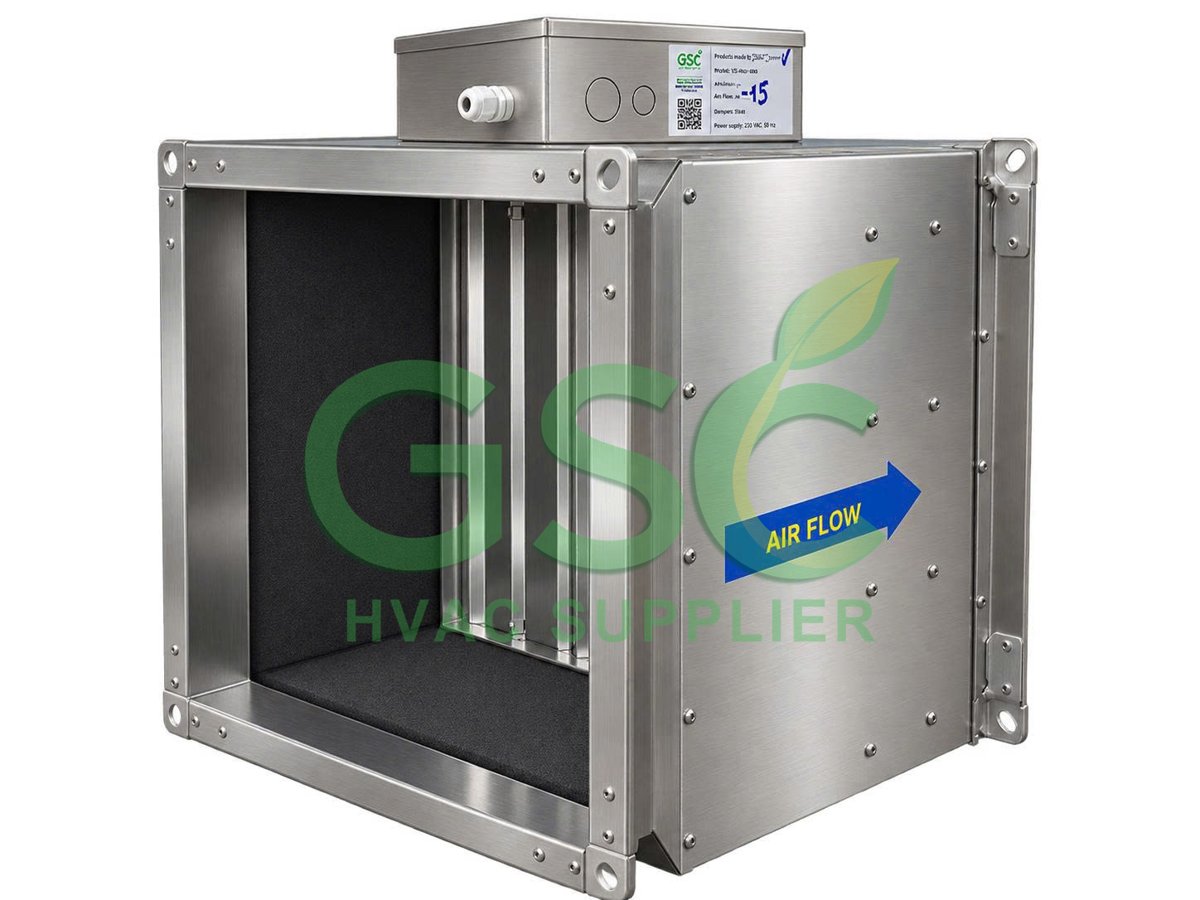
Stainless-steel casing version (optional) of the GSC-VAV-P line.
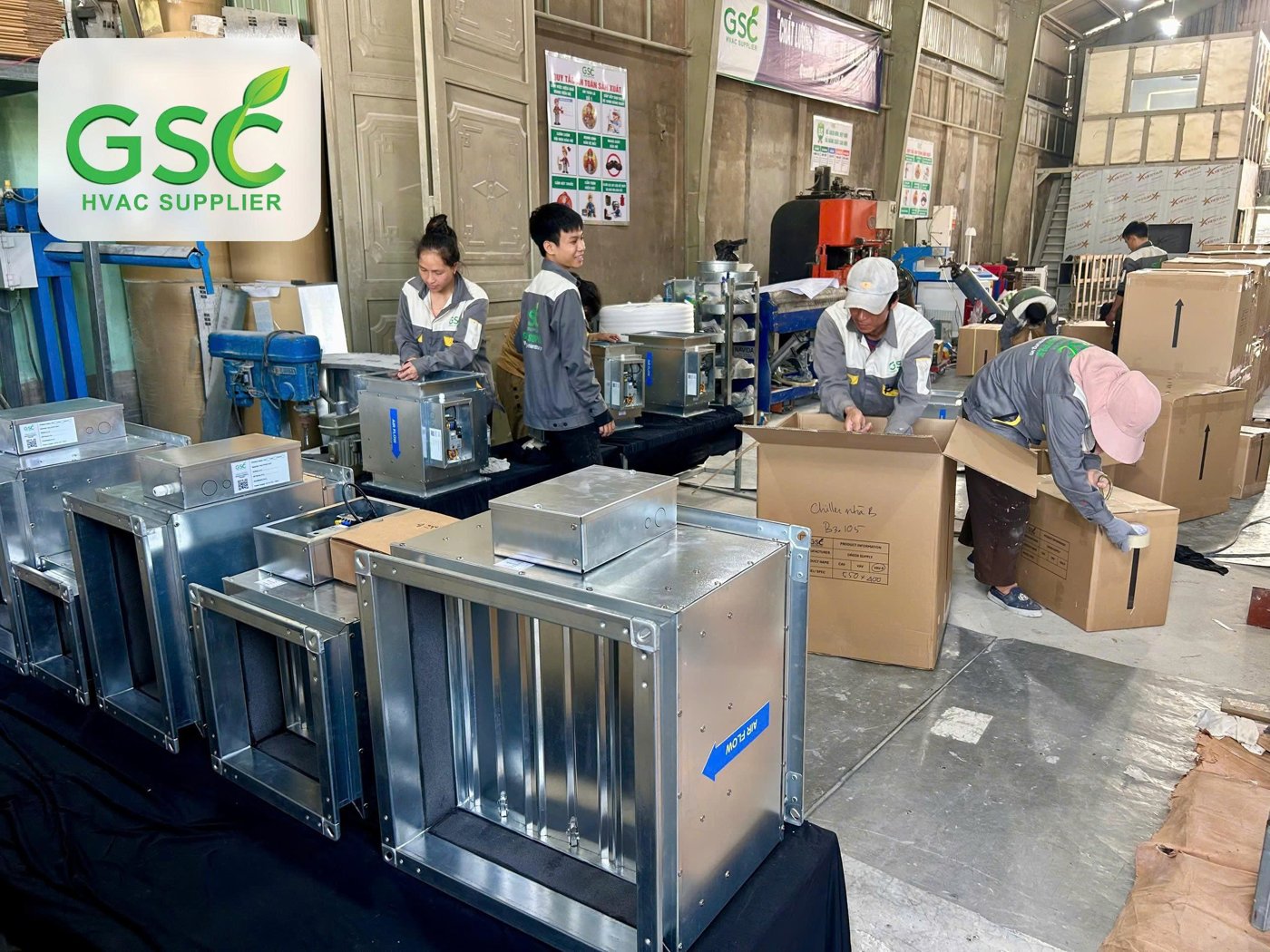
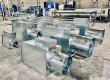
A batch of GSC VAV/damper boxes being finished and packed at the factory.
Can the room-pressure VAV box be used for negative-pressure rooms? Yes. The controller switches between positive and negative pressure via the Belimo Assistant app or a BACnet/Modbus command; the specific pressure follows the project design documents.
Can the GSC-VAV-P be used for an operating theatre or cleanroom? It should not. The standard configuration is on the supply/extract damper, suited to rooms with non-critical leakage. Operating theatres, isolation rooms and cleanrooms are tight rooms needing a bypass or cascade configuration; send your documents so GSC can assess them separately.
Can a standard VAV box hold a room pressure difference? No. A standard VAV box controls temperature and airflow and does not measure room pressure. If a pressure difference must be held, use the room-pressure line.
What information does GSC need for a quote? Drawings or BOQ, supply/exhaust airflow per room, target pressure, expected room tightness, casing material requirement and BMS communication.
Send the design documents and pressurised-room schedule via Zalo/Hotline +84 905 604 970 or email gsc.mientrung@gmail.com — GSC advises on configuration, selects sizes and quotes the same day.
VAV/CAV box product page · Download the VAV/CAV box catalogue (PDF)