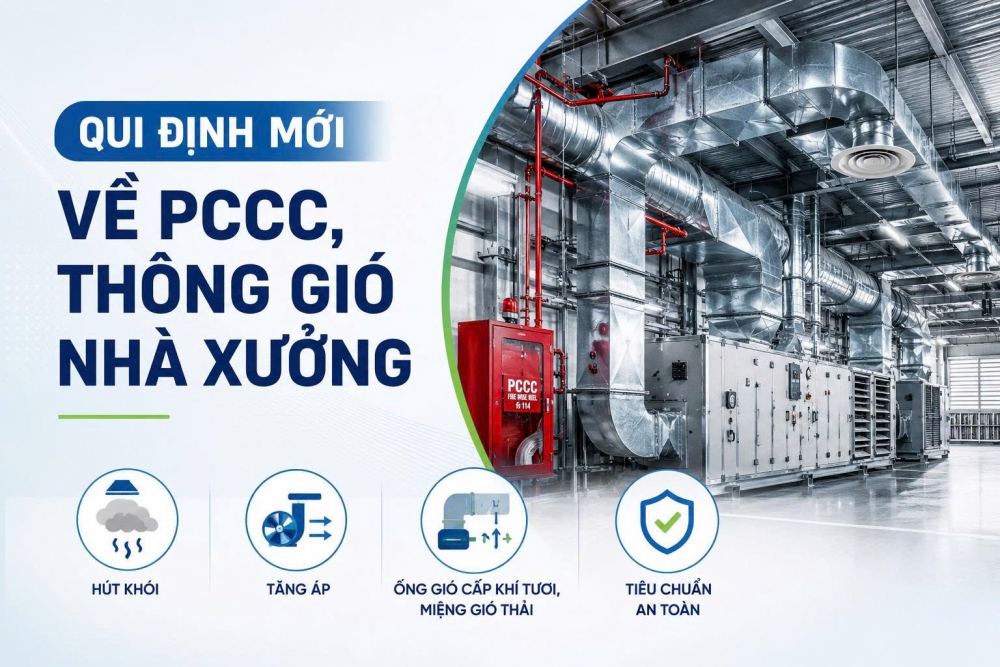
[UPDATE 2026] New Factory Fire Safety Regulations for 2026
An update on the new fire safety and ventilation regulations for factories in 2026. Learn about the standards for smoke extraction, fresh air supply and pressurization, and the right HVAC solutions.
In recent years, fire safety and factory ventilation regulations have become increasingly strict to ensure the safety of production facilities, factories and industrial parks. In 2026 in particular, many businesses are paying more attention to designing HVAC and ventilation systems that meet the new fire safety standards, both to avoid legal risks and to optimize long-term operation.
So what is noteworthy about the new fire safety and factory ventilation regulations? What should businesses keep in mind when designing and installing their systems? Let's find out in the article below.
Why is ventilation directly linked to fire safety?
Many people think ventilation systems are only there to circulate air or cool a factory. In reality, they play a very important role in fire protection.
In a fire:
- Toxic smoke is the greatest danger
- Rising temperatures hinder evacuation
- Lack of oxygen hampers rescue efforts
This is when smoke extraction and fresh air supply systems help to:
- Push smoke out of the fire zone
- Keep escape routes clear
- Help firefighters reach the scene
- Reduce the risk of smoke inhalation
That is why current fire safety regulations require factories to have suitable ventilation and smoke extraction solutions.
New regulations businesses need to know
Today, fire safety and factory ventilation standards mainly refer to:
- QCVN 06 on fire safety for buildings and structures
- Industrial HVAC design standards
- Regulations on smoke extraction and pressurization systems
Many requirements are now being inspected more strictly, including:
Factory smoke extraction systems
Factories with large floor areas or a high fire risk usually need:
- Heat-resistant smoke exhaust fans
- Fire-rated ducts
- Compliant smoke extraction grilles
- Automatic control systems that activate in a fire
In particular, smoke exhaust fans must be able to operate at high temperatures for a specified time to ensure effective smoke removal.
Stairwell and escape route pressurization systems
For:
- Multi-storey factories
- Production buildings
- Buildings with enclosed areas
pressurization systems are extremely important.
Purpose:
- Prevent smoke from entering escape stairwells
- Maintain positive pressure in escape areas
- Support safe evacuation in an emergency
Many buildings are now required to carry out upgrades because they do not achieve the pressure or airflow required by regulations.
Ventilation for basements and enclosed areas
Areas such as:
- Basements
- Warehouses
- Plant rooms
- Chemical storage areas
all require dedicated ventilation systems.
In addition to supplying fresh air, the system must also:
- Extract toxic gases
- Control CO levels
- Limit heat build-up
- Switch to smoke extraction mode in a fire
This item is often strictly inspected during fire safety acceptance.
HVAC and fire safety design trends in 2026
Beyond meeting safety standards, many businesses now prioritize smart, energy-efficient HVAC solutions.
Key trends include:
- Automatic control of smoke exhaust fans
- BMS integration
- Sensor-based airflow monitoring
- Remote control
- Optimized energy consumption
Many projects are also switching to:
- Energy-saving EC fans
- High-quality fire-resistant materials
- Smart pressure control systems
- EI fire-rated ducts
This allows buildings to meet fire safety regulations while optimizing long-term operating costs.
Common mistakes that make acceptance difficult
Many businesses focus only on production and do not invest properly in HVAC and fire safety systems. This leads to common mistakes such as:
- Insufficient smoke extraction airflow
- Poorly positioned grilles
- Materials that do not meet fire-resistance standards
- No make-up air supply system
- Installation that deviates from the design drawings
- No testing of actual pressure
These mistakes can lead to:
- Delayed project acceptance
- Additional upgrade costs
- Disruption to factory operations
Choosing a design and installation contractor with real-world experience is therefore very important.
Fire-code-compliant factory ventilation solutions
To ensure effectiveness and comply with the new regulations, businesses should:
- Survey the site from the outset
- Design airflow correctly according to standards
- Choose certified equipment
- Calculate smoke extraction and air supply together
- Test actual pressure and operation
They should also prioritize solutions that are:
- Energy-efficient
- Easy to maintain
- Reliable over the long term
- Expandable in the future
A compliant ventilation system not only makes a building safer but also improves productivity and the working environment for staff.
Conclusion
The new fire safety and factory ventilation regulations in 2026 are being enforced ever more strictly to ensure the safety of industrial buildings.
Businesses should pay particular attention to:
- Smoke extraction systems
- Escape route pressurization
- Basement ventilation
- Fresh air supply
- Fire-resistant materials
- Standards-compliant HVAC design
Investing properly from the start makes acceptance easier, reduces operational risks and optimizes long-term costs for businesses.