Fire-rated air ducts are ducts with a fire-resistant protective layer that keeps their shape and thermal insulation for a defined time during a fire. This lets smoke extract and stair pressurization systems keep working during evacuation, and ducts passing through other fire compartments do not become a path for fire.
Since QCVN 06:2022/BXD and the 2024 Law on Fire Prevention, Fighting, Rescue and Salvage (effective 01/07/2025) came into application, fire-rated ducts are an item that must have documentation at fire protection acceptance. This article explains the EI rating, the construction of GSC ducts and how to choose the EI rating for each location.
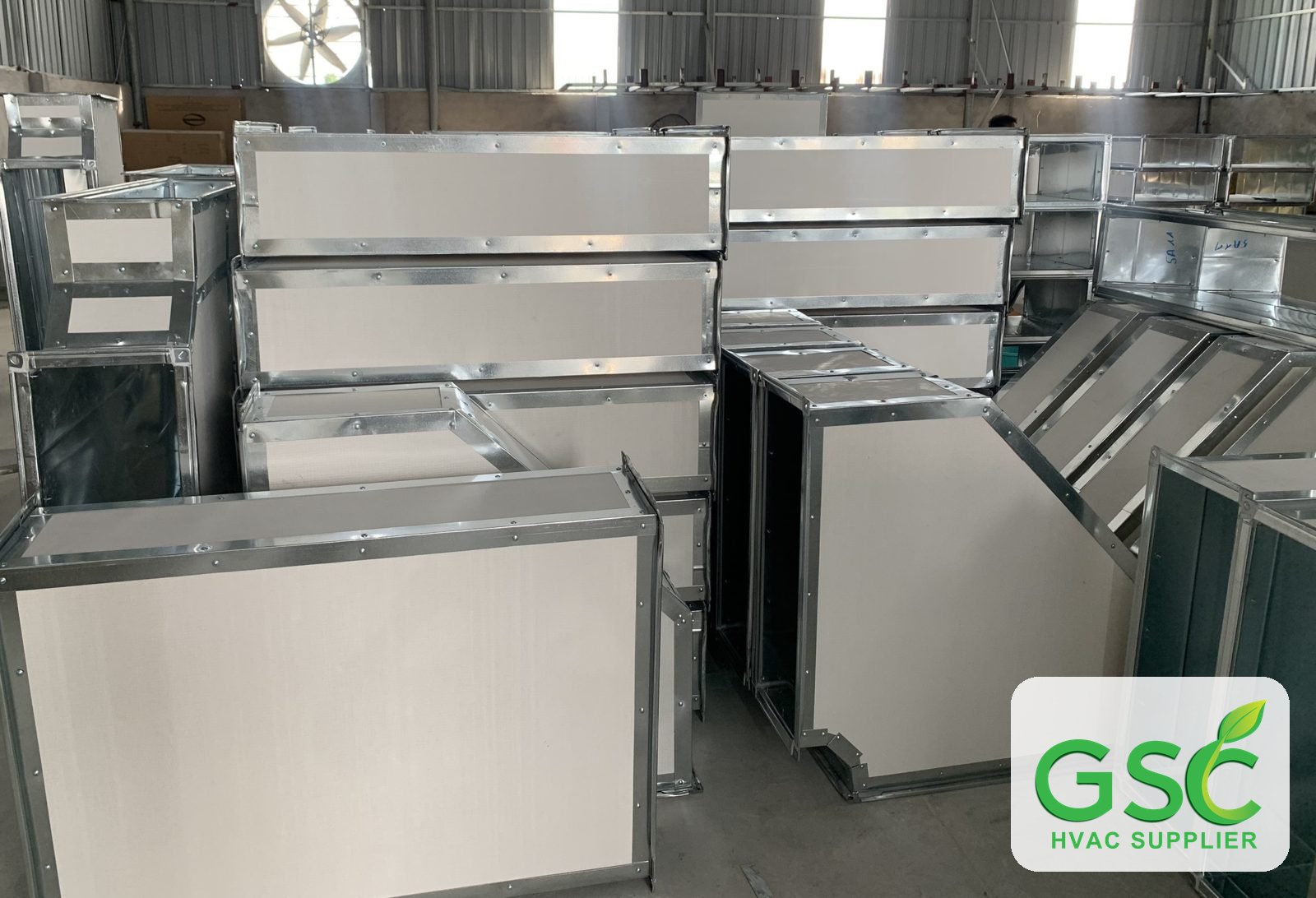
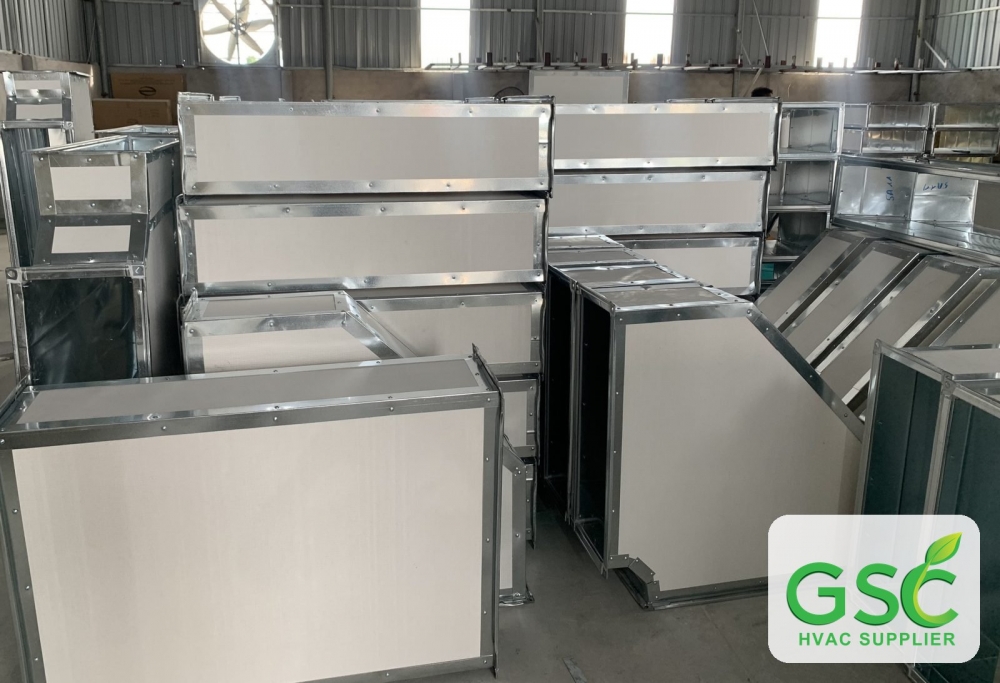
GSC EI60 fire-rated duct: 0.75 mm galvanized steel clad with MgO fire board.
The standard GSC construction consists of a 0.75 mm galvanized steel duct and an outer fire-resistant board layer. The board thickness changes with the EI rating:
| Fire rating | Steel duct | Fire-resistant board | Notes |
|---|---|---|---|
| EI30 / EI45 / EI60 | 0.75 mm galvanized steel | 5 mm MgO board | GSC's main solution: one construction shared by all three ratings |
| EI90 / EI120 | 0.75 mm galvanized steel | 20 mm MgO board or other board per project requirements | Designed per each project's documents |
Advantage of 5 mm MgO board for EI60: the thin cladding makes the duct lighter, saves ceiling void height and installs faster than thick-board solutions. Because one construction meets EI30, EI45 and EI60, contractors can take off quantities more easily and reduce material mix-ups on site.
Joints use flanges and heat-resistant ceramic gaskets; elbows, tees, reducers and fittings are fabricated to the same EI rating as the straight duct.
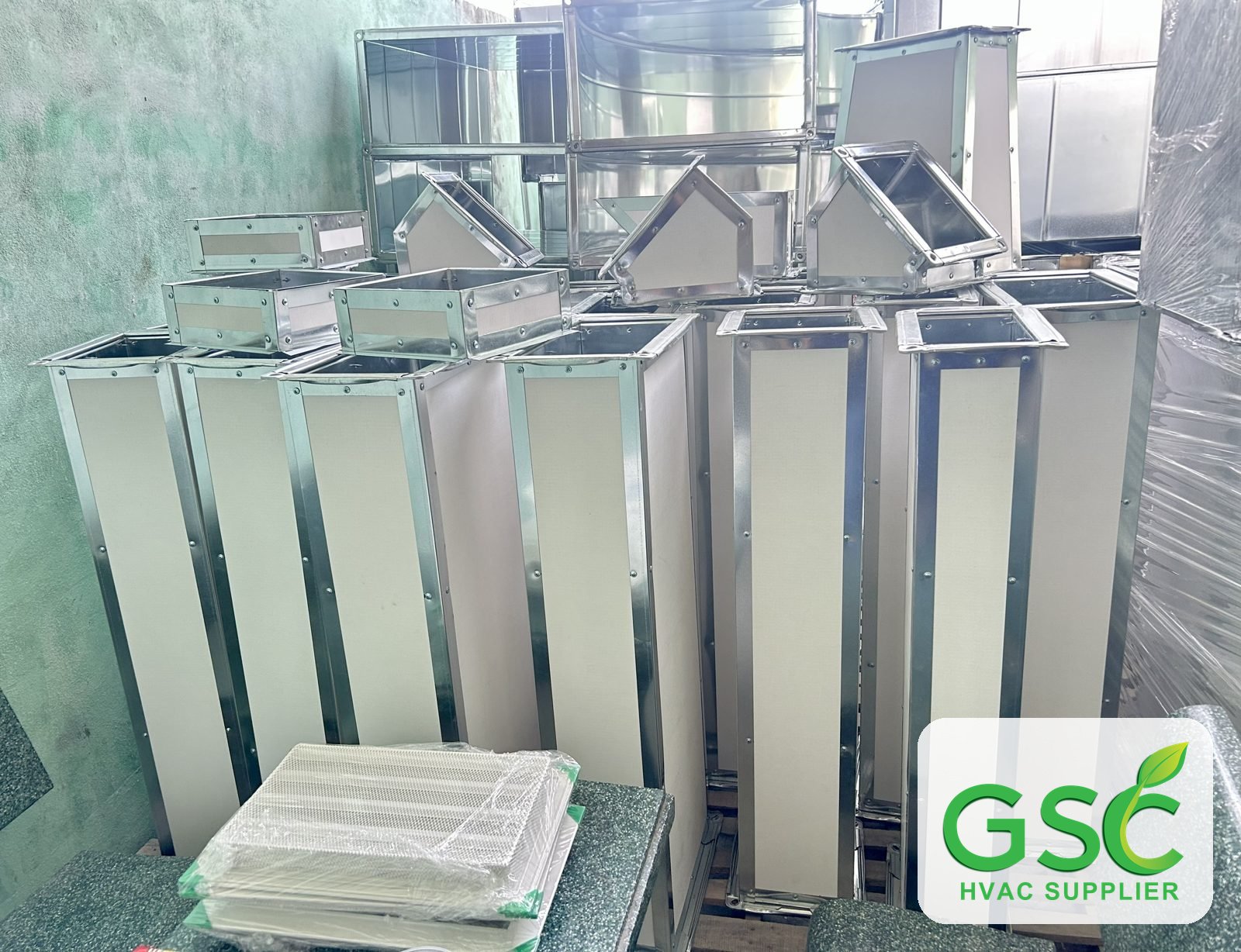
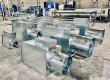
Fire-rated ducts and fittings completed at the GSC workshop.
A duct system achieves its EI rating only when installed to the construction that was tested: same materials, thickness, joint type and hangers. Changing materials on site voids the fire resistance documentation.
The specific EI rating is set by the fire protection design under QCVN 06:2022/BXD (Appendix D – smoke protection) and the building's fire resistance grade. The table below shows common cases for reference when taking off quantities:
| Duct location | Common EI rating | Matching GSC construction |
|---|---|---|
| Corridor smoke extract, pressurization within the same fire compartment | EI30–EI45 | 0.75 mm steel + 5 mm MgO |
| Ducts through technical shafts, basements, garages | EI60 | 0.75 mm steel + 5 mm MgO |
| Main riser ducts crossing several floors and fire compartments | EI90–EI120 | 0.75 mm steel + 20 mm MgO or per project |
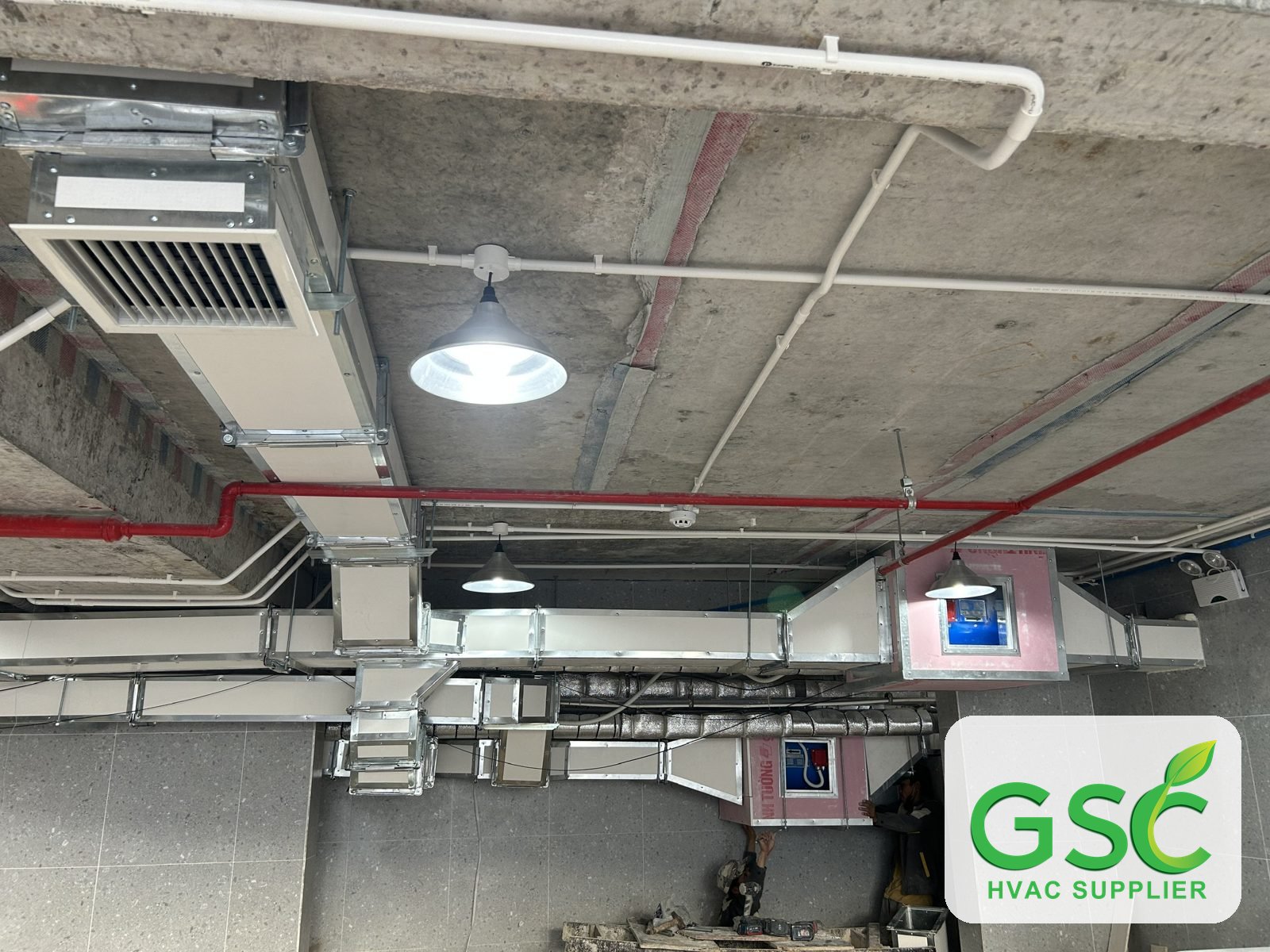
Fire-rated duct and fire damper system after installation on site.
At fire protection acceptance, the owner and the fire authority will compare the installed duct with the fire resistance documentation of the construction. When choosing a supplier, contractors should require:
GSC provides material documents and discusses the fire resistance documentation applicable to each project from the quotation stage, so contractors are not caught short at acceptance.
| Criteria | Factory-made duct | Fire board cladding on site |
|---|---|---|
| Quality control | Consistent, inspected at the workshop | Depends on workers' skill |
| Installation speed | Fast, flanged like ordinary duct | Slow, many steps at height |
| Acceptance documents | Matches the tested construction | Easily questioned when the construction differs from the test sample |
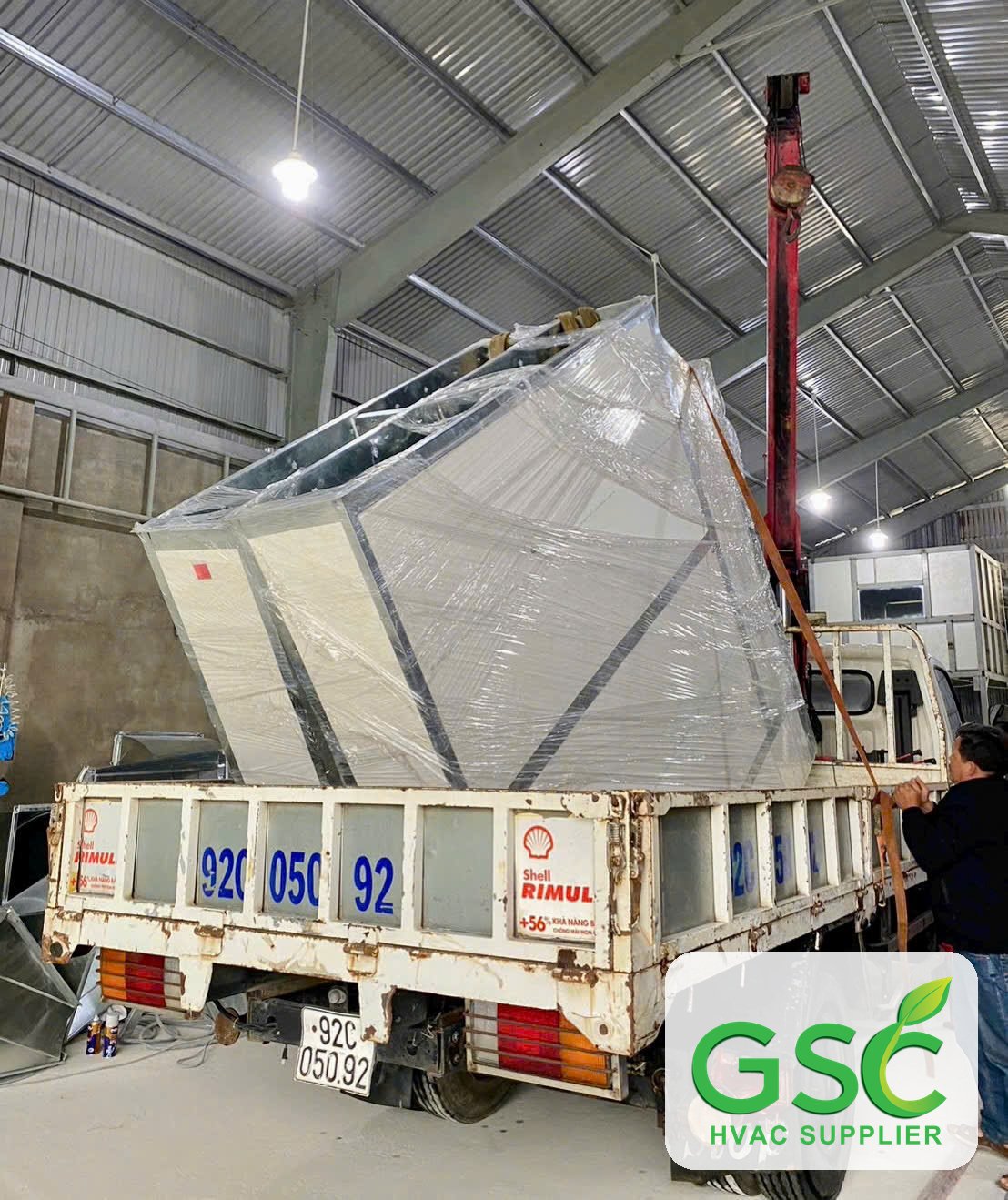
GSC fire-rated ducts wrapped for protection and transported to site.
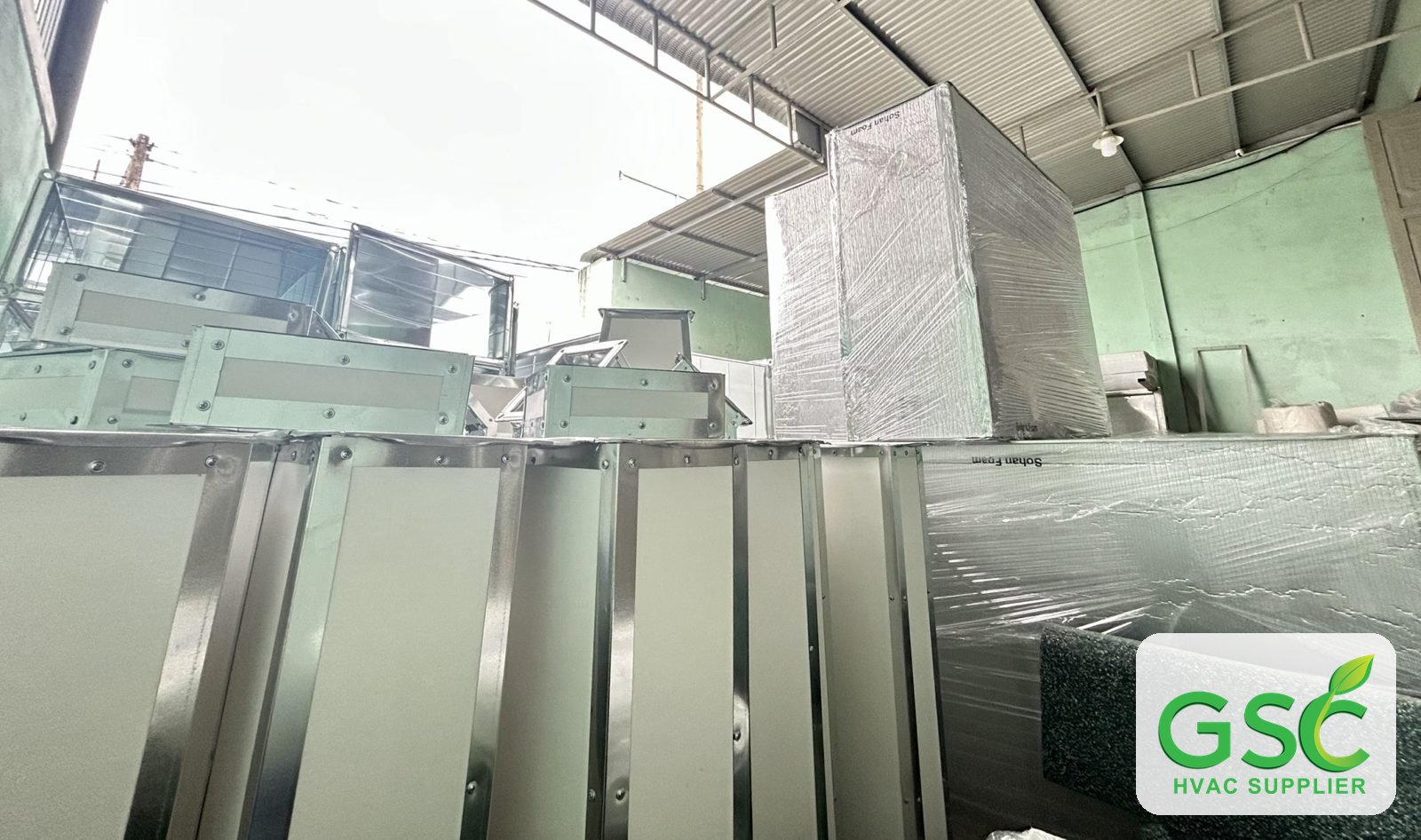
Fire-rated ducts completed at the GSC factory.
Must a fire-rated duct be paired with a fire damper? It depends on the system and location. Smoke extract and pressurization systems usually use EI duct along the whole route; ordinary air-conditioning ducts passing through a fire wall usually use FD/MFD dampers. The design documents decide.
Why can one 5 mm MgO construction serve EI30, EI45 and EI60? A construction that reaches 60 minutes of fire resistance also meets locations requiring 30 or 45 minutes, provided it is installed to the construction and within the scope of the report.
Can the MgO board be replaced with another material? Only if the new construction has been tested and has its own report. Fire resistance documentation is tied to a specific construction.
What should coastal Central Vietnam projects watch for? Salt air affects the outer steel and hangers; discuss a corrosion protection option when requesting the quote.
Send your BOQ or smoke extract and pressurization drawings via Zalo/Hotline 0905 604 970 or email gsc.mientrung@gmail.com. GSC takes off quantities, proposes the construction for each EI rating and quotes.
View the EI fire-rated duct product page · Download the EI duct catalogue (PDF)