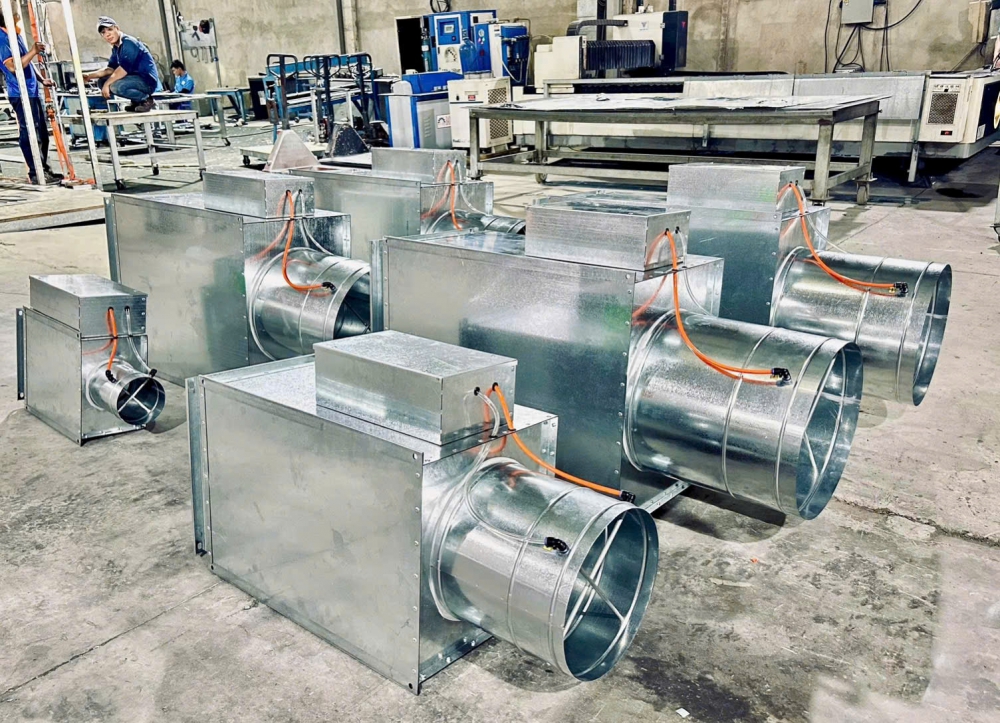
However, the HVAC system is also the most energy consuming component in the entire project. According to many studies, HVAC can account for 40–60% of the total power consumption of a building. Therefore, finding energy -saving HVAC solutions is not only an urgent requirement to reduce operating costs, but also help meet green building standards, contribute to environmental protection and reduce greenhouse gas emissions.
1. Design a reasonable HVAC system from the early stages
One of the factors that determine the energy efficiency of the HVAC system is the design stage. The wrong design from the beginning can cause the system to operate ineffectively, consume power and make it difficult to renovate later.
For high -rise buildings, the calculation of air conditioning capacity, wind flow, equipment location, wind direction ... should be done carefully. In addition, choosing the right system is also very important. Some popular and energy -saving solutions include:
VRF system (variable refrigerant flow): allows independent control of each region, saving energy efficiently when the space is not uneven.
Central chiller system: Suitable for large -scale projects, combined with AHU (Air Handling Unit) and FCU (Fan coil Unit) to distribute cold air.
Heat recovery: Helps to take advantage of energy from emissions to save energy for cooling or heating.
2. Use high -performance equipment and inverter technology
Choosing quality equipment, achieving energy -saving certification is a factor not to be missed. Modern HVAC devices today integrate inverter technology, helping to adjust the power flexibly depending on the actual needs instead of operating 100% of the continuous capacity.
Some common energy -saving devices include:
Inverter compressor: Adjust the rotation speed depending on the temperature, reduce power consumption.
EC (Electronically Commutated) fan: High performance, low power consumption and smooth operation.
CO2 and moisture sensors: Help the system to adjust the amount of fresh wind suitable, avoiding waste when not needed.
3. Smart automation and control
The integration of the Building Management System (BMS - Building Management System) allows the entire HVAC system to accurately and automatically. BMS can schedule operations for each region, adjust the temperature by peak/low point or automatically turn off when there are no users.
In addition, smart monitoring systems also have the ability:
Warning when the device operates abnormally or exceeding the allowed consumption.
Operating data analysis to optimize maintenance and adjustment process to save more energy.
Connect to light sensors, windows, users to synchronize air conditioning with actual conditions.
4. Periodic maintenance to maintain performance
Many HVAC systems are well designed and installed, but after a period of operation, they have energy -consuming conditions, the cause often comes from the proper maintenance. Periodic maintenance helps:
Ensure devices such as air filter, heat exchange, fan ... always clean and effective.
Early detection of gas leaks, motor incidents or specifications.
Minimize the risk of operating disruption, extending equipment life.
A monthly/quarterly/year maintenance plan, combined with smart monitoring from BMS, will help the system always in optimal operating state and energy saving.
5. Combining HVAC with green building design
The HVAC system is inseparable from the overall architecture of the building. A project designed in the direction of "green architecture" will help reduce the burden on the air conditioning system.
Support solutions include:
Use insulation glass, insulation wall: reduce heat absorption from the outside environment.
Reasonable natural ventilation and ventilation: Reduce the need for air conditioning on cool days.
Open space design, minor closed room limit: Help the airflow effectively.
Installing outdoor sunshade systems: Reducing heat directly into the glass surfaces.
6. Renewable energy and HVAC
A new trend is now integrating the HVAC system with renewable energy sources like solar power. Many businesses have successfully implemented the model of using solar power to operate the central air conditioner in the daytime - the highest consumption time. This not only saves electricity costs but also reduces the load on the national grid.